
How to prepare for your trip to France
The language you will hear, the phrases to learn first, money, plugs, emergency numbers and a few local habits, and a way to plan the trip and keep your phrases offline.
Try it free for 14 days.
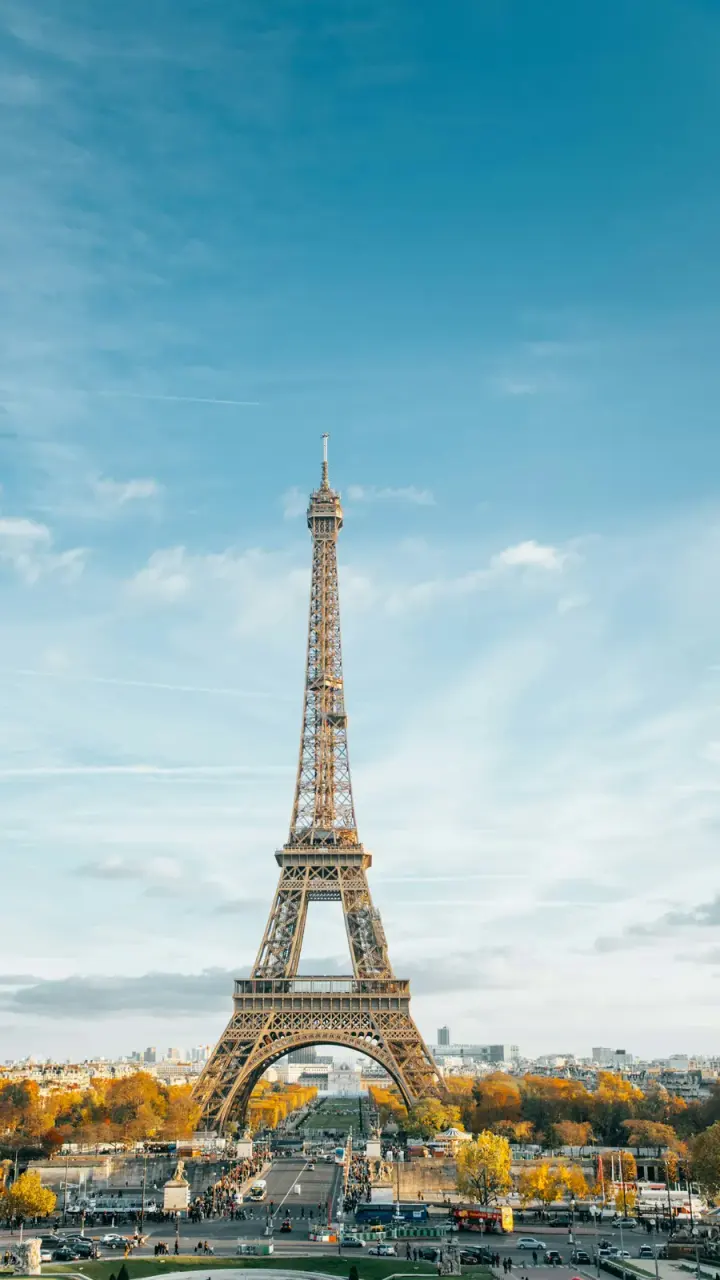
Photo credit
Photo of the Eiffel Tower, Paris by Anthony DELANOIX (opens in a new tab) on Unsplash, used under the Unsplash License (opens in a new tab).
What you will hear in France.
French is spoken everywhere in France. In Paris and other busy places many people speak some English, and starting in French, even with a short greeting, usually changes how a conversation begins.
A few regions keep their own languages alongside French: Breton in Brittany, Alsatian in Alsace and Corsican in Corsica. French is understood everywhere, and you may notice a different language on a sign or in a market.
Paris, Lyon, Marseille, Nice, Bordeaux, Provence, Normandy, Brittany, Corsica and the Alps are all in France.
Phrases for your first day.
They come from the first lessons. In the app each has audio and a note on when to use it, and you can save it to your phrasebook.
Bonjour, madame.
Hello, madam.
Merci beaucoup !
Thank you very much!
Excusez-moi, madame…
Excuse me, madam…
Ça coûte combien ?
How much does it cost?
Vous parlez anglais ?
Do you speak English?
Vous pouvez répéter, s'il vous plaît ?
Could you repeat that, please?
L'addition, s'il vous plaît.
The bill, please.
Je voudrais un café, s'il vous plaît.
I'd like a coffee, please.
France at a glance.
These are usually right but not always. For anything that matters, check the official advice before you go.
- Euro (€)
- +33
- On the right
- Type C, E · 230 V
- 112, 15, 17, 18, 114
Entry rules, health advice and safety change, so they are not on this page. The UK Foreign, Commonwealth & Development Office keeps them up to date for UK travellers: UK government travel advice for France (opens in a new tab).
Habits worth knowing before you arrive.
Habits, not rules: places and people vary, so each note says where it applies.
In August many people leave the big cities, and some small shops and restaurants close for a week or more, while the coast and the mountains are at their busiest. Check opening days and book ahead.
A short bonjour when you walk into a shop, café or bakery, and merci, au revoir when you leave, is the usual courtesy and often shapes how people answer you.
A carafe of tap water, une carafe d'eau, is normally free on request in restaurants. Many restaurants also offer a fixed-price menu at lunch that costs less than the same dishes chosen separately.
Service is usually included in the prices in France, so a tip is a small extra for good service rather than something people expect.
Plan the trip to France in one place.
Put it on days
Add France to a trip, then put places on days with a time and a note. Directions open in your maps app.
Save the videos
Paste the TikTok, Instagram or YouTube link that gave you the idea and attach it to the stop it belongs to.
Take your phrases offline
Download the travel guide on Wi-Fi. The phrasebook, packs, notes and audio work with no signal.
Share the plan
Send a link to the people you are going with. They can read it without an account, and you can invite them to edit.
About a trip to France.
Do I need French in France?
Many people in Paris and tourist areas speak some English. A greeting in French and a few phrases for cafés and shops are the most useful things to have.
What should I learn first?
"Bonjour", please and thank you, ordering a coffee, asking how much, and asking someone to repeat. They are in First Steps.
Does the French course cover Belgium and Switzerland?
There are notes for both, including "septante" and "nonante" for 70 and 90.
Other trip guides
Be ready to speak when you land in France.
Create a free account, add the trip, and start with the phrases for your first hour.
Try it free for 14 days.