
How to prepare for your trip to Poland
The language you will hear, the phrases to learn first, money, plugs, emergency numbers and a few local habits, and a way to plan the trip and keep your phrases offline.
Try it free for 14 days.
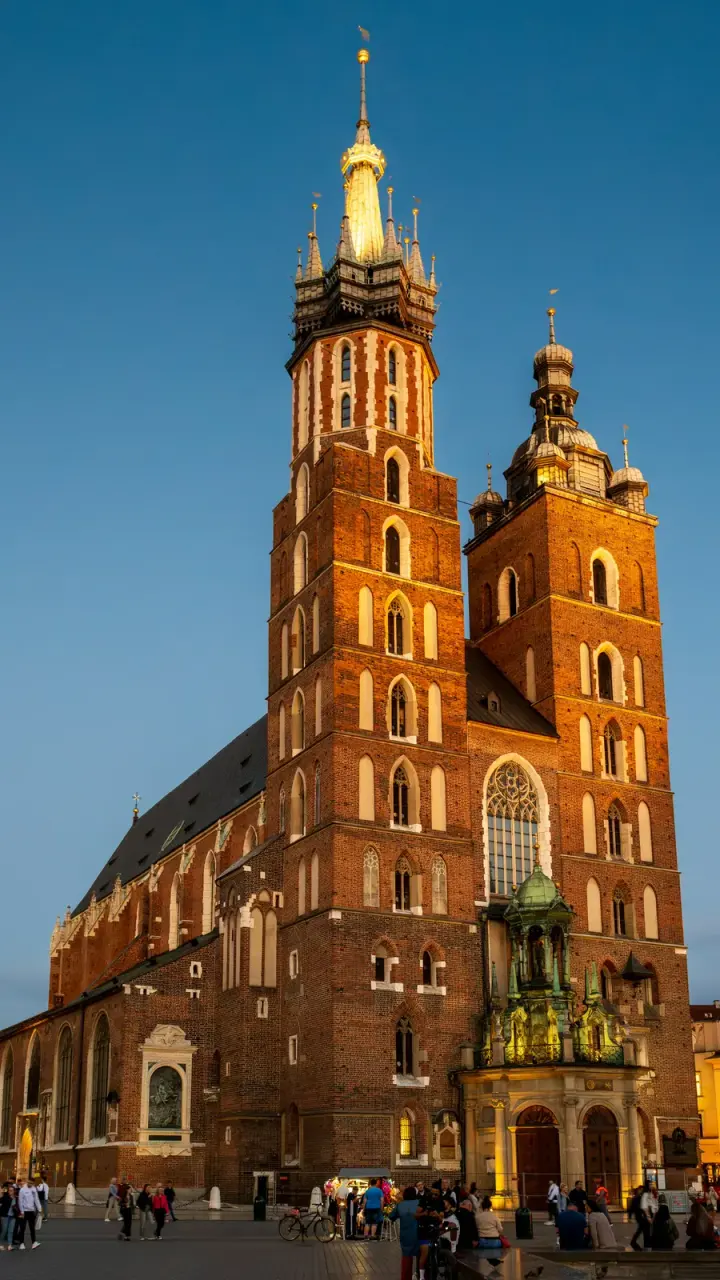
Photo credit
Photo of St Mary's Basilica, Kraków by Tomasz Zielonka (opens in a new tab) on Unsplash, used under the Unsplash License (opens in a new tab).
What you will hear in Poland.
Polish is spoken across Poland. In Warsaw, Kraków and other busy places English is easier to find, especially with younger people. In smaller towns and in the countryside it is less common, so phrases in Polish are useful.
Politeness uses Pan (to a man) and Pani (to a woman). Milk bars, inexpensive canteen-style restaurants, are worth knowing about, and the guide covers ordering at one.
Warsaw, Kraków, Gdańsk, Wrocław, Poznań, Zakopane and the Masurian lakes are all in Poland.
Phrases for your first day.
They come from the first lessons. In the app each has audio and a note on when to use it, and you can save it to your phrasebook.
Dzień dobry. Dzień dobry!
Good day. Good day!
Dziękuję bardzo.
Thank you very much.
Ile to kosztuje?
How much does it cost?
Gdzie jest dworzec?
Where is the station?
Proszę powtórzyć, dziękuję.
Please repeat that, thank you.
Rachunek, proszę.
The bill, please.
Chciałbym herbatę, proszę.
I'd like a tea, please. (a man speaking)
Poland at a glance.
These are usually right but not always. For anything that matters, check the official advice before you go.
- Polish zloty (PLN)
- +48
- On the right
- Type C, E · 230 V
- 112, 986, 997, 998, 999
Entry rules, health advice and safety change, so they are not on this page. The UK Foreign, Commonwealth & Development Office keeps them up to date for UK travellers: UK government travel advice for Poland (opens in a new tab).
Habits worth knowing before you arrive.
Habits, not rules: places and people vary, so each note says where it applies.
On 1 November, All Saints' Day, families visit cemeteries and light candles, and many people travel home. Shops and transport are busy, and some places close.
Many towns have milk bars (bary mleczne): simple canteen-style cafés serving home-style dishes such as pierogi and soups, often with short menus and a quick service.
Many shops close on Sundays and on public holidays, and there are several religious holidays in the year. Buy what you need the day before, and check opening days.
Dzień dobry is the usual greeting when you come into a shop or an office, and many people respond warmly when a visitor tries a word of Polish.
Plan the trip to Poland in one place.
Put it on days
Add Poland to a trip, then put places on days with a time and a note. Directions open in your maps app.
Save the videos
Paste the TikTok, Instagram or YouTube link that gave you the idea and attach it to the stop it belongs to.
Take your phrases offline
Download the travel guide on Wi-Fi. The phrasebook, packs, notes and audio work with no signal.
Share the plan
Send a link to the people you are going with. They can read it without an account, and you can invite them to edit.
About a trip to Poland.
Do I need Polish in Poland?
In cities and tourist places many people speak some English. Elsewhere Polish helps, and effort in Polish is usually appreciated.
Is Polish too hard to try?
Polish grammar takes time. The phrases for a trip are short, with audio, and you can say them without learning the grammar first.
Does the guide cover milk bars?
Yes. Lunch at a milk bar is one of the four missions.
Other trip guides
Be ready to speak when you land in Poland.
Create a free account, add the trip, and start with the phrases for your first hour.
Try it free for 14 days.