
How to prepare for your trip to Italy
The language you will hear, the phrases to learn first, money, plugs, emergency numbers and a few local habits, and a way to plan the trip and keep your phrases offline.
Try it free for 14 days.
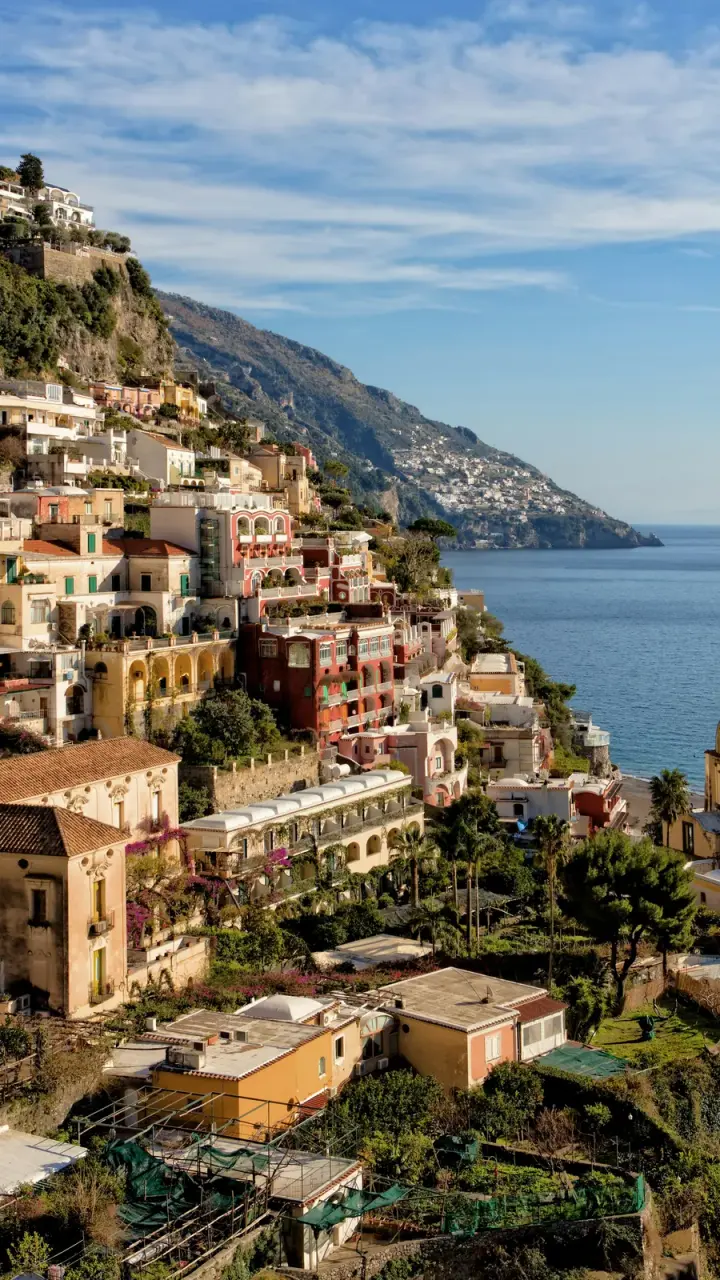
Photo credit
Photo of the Amalfi Coast by Ricardo Gomez Angel (opens in a new tab) on Unsplash, used under the Unsplash License (opens in a new tab).
What you will hear in Italy.
Italian is spoken everywhere in Italy, with accents and dialects that change from one region to the next. In hotels and busy tourist places many people speak some English. In smaller towns and with older people you will use Italian more, and a few phrases are usually welcomed.
A few regions have more than one language. German is spoken in South Tyrol and French is co-official in the Aosta Valley. Sardinia and Sicily also have their own local languages.
Rome, Milan, Florence, Venice, Naples, Sicily, Sardinia, the Amalfi Coast, Lake Como and the Dolomites are all in Italy.
Phrases for your first day.
They come from the first lessons. In the app each has audio and a note on when to use it, and you can save it to your phrasebook.
Buongiorno!
Good morning!
Mi dispiace.
I'm sorry.
Quanto costa?
How much is it?
Parla inglese?
Do you speak English?
Può ripetere, per favore?
Could you repeat that, please?
Posso avere il conto?
Can I have the bill?
Vorrei una camera singola.
I'd like a single room.
Non capisco.
I don't understand.
Italy at a glance.
These are usually right but not always. For anything that matters, check the official advice before you go.
- Euro (€)
- +39
- On the right
- Type C, F, L · 230 V
- 112, 113, 115, 118
Entry rules, health advice and safety change, so they are not on this page. The UK Foreign, Commonwealth & Development Office keeps them up to date for UK travellers: UK government travel advice for Italy (opens in a new tab).
Habits worth knowing before you arrive.
Habits, not rules: places and people vary, so each note says where it applies.
In August, especially around 15 August, many small shops and family-run restaurants close for a week or more. Check opening days before you plan a day around one place.
Many Italians drink their coffee standing at the bar and move on in a few minutes. Sitting at a table is often more expensive, so look at the price list if you want to stay a while.
Many restaurants add a small per-person charge for the table and bread, called coperto. It is usually printed on the menu and is separate from any tip.
Dinner usually starts later than in the UK, and many kitchens open from around half past seven. Opening hours vary, so the sign on the door is the best guide.
Plan the trip to Italy in one place.
Put it on days
Add Italy to a trip, then put places on days with a time and a note. Directions open in your maps app.
Save the videos
Paste the TikTok, Instagram or YouTube link that gave you the idea and attach it to the stop it belongs to.
Take your phrases offline
Download the travel guide on Wi-Fi. The phrasebook, packs, notes and audio work with no signal.
Share the plan
Send a link to the people you are going with. They can read it without an account, and you can invite them to edit.
About a trip to Italy.
Do I need to speak Italian in Italy?
No. Many people in hotels and tourist areas speak some English. Outside them, and in smaller towns, Italian helps a lot, and the effort tends to be appreciated. The bar, the restaurant and the train are the places to start.
What should I learn before I go?
Greetings, how to order, how to ask for the bill, how to ask where something is and how to ask someone to say it again. First Steps teaches those in the first lessons.
Will my phone work for translation?
A translation app helps when you are stuck. Learning the first phrases lets you start the conversation yourself, and the offline phrasebook works with no signal.
Other trip guides
Be ready to speak when you land in Italy.
Create a free account, add the trip, and start with the phrases for your first hour.
Try it free for 14 days.